

Selecting the Right Power and Control Cables
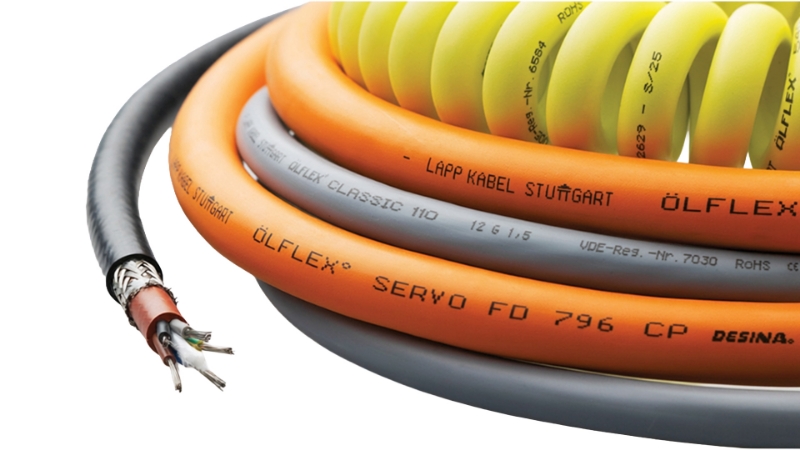
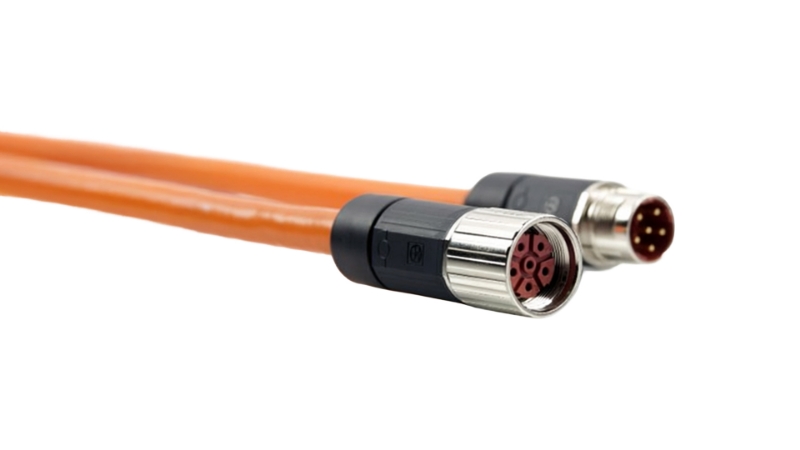
LAPP’s ÖLFLEX® power and control cables are some of the most widely used in the world. Power cables provide the optimum power supply; while control cables, on the other hand, transmit signals for controlling devices and machines.
Industrial power cables are vital to industrial and automation processes. Without power, electrical machinery stops functioning, and unwanted downtime ensues. Once a machine is powered on, industrial control cables can then assist in telling it what to do.
In 1959, LAPP founder Oskar Lapp introduced an industrially manufactured flexible control cable with colour identified conductors. Today, ÖLFLEX® solutions serve machine building, renewable energy, transport, food processing, robotics and many other industrial applications.
Since then, LAPP’s ÖLFLEX® cables have set the global standard for durability, reliability, and versatility. Used across a wide range of industries, ÖLFLEX® industrial power and control cables provide dependable performance in demanding environments.
ÖLFLEX® cables are used in applications such as mechanical and system engineering, measurement, control, heating, and climate technology, renewable energy sectors, including wind and solar power, public infrastructure such as airports and railway stations, medical technology and chemical industries, food and beverage processing, robotics and automation, mobile electrical equipment, power tools, and stage engineering.
“LAPP has continued to evolve the ÖLFLEX® range to meet the growing needs of industry. LAPP Australia has continued to expand its local stock, with service, support, technical expertise, and no minimum order quantities nationwide to assist Australian industry with minimising downtime,” says LAPP Australia Managing Director, Simon Pullinger.
What are power cables used for?
LAPP’s ÖLFLEX® industrial power cables supply devices, machines, and plants with energy. They also connect the power supply in buildings, and distribute energy (such as in power stations and converter stations).
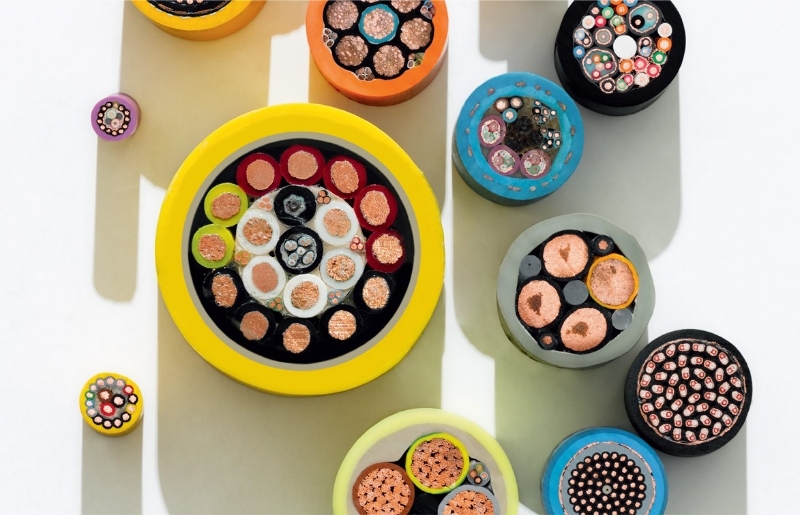
A power cable has at least one core and a maximum of five cores. A variant with more than two cores usually consists of a neutral conductor, a protective conductor, and one to three current-carrying outer conductors (phases, L1-L3), depending on the single-phase or three-phase alternating current.
The conductor cross-section is generally ≥ 0.5 mm², the individual cores are colour-coded according to VDE 0293-308/HD 308 (core identification code for colour-coded low-voltage cables and wires).
“LAPP offers power cables for the low-voltage range up to 1 kV and for the medium-voltage range up to 30 kV, with certifications to comply with a range of global and local Standards,” says Pullinger.
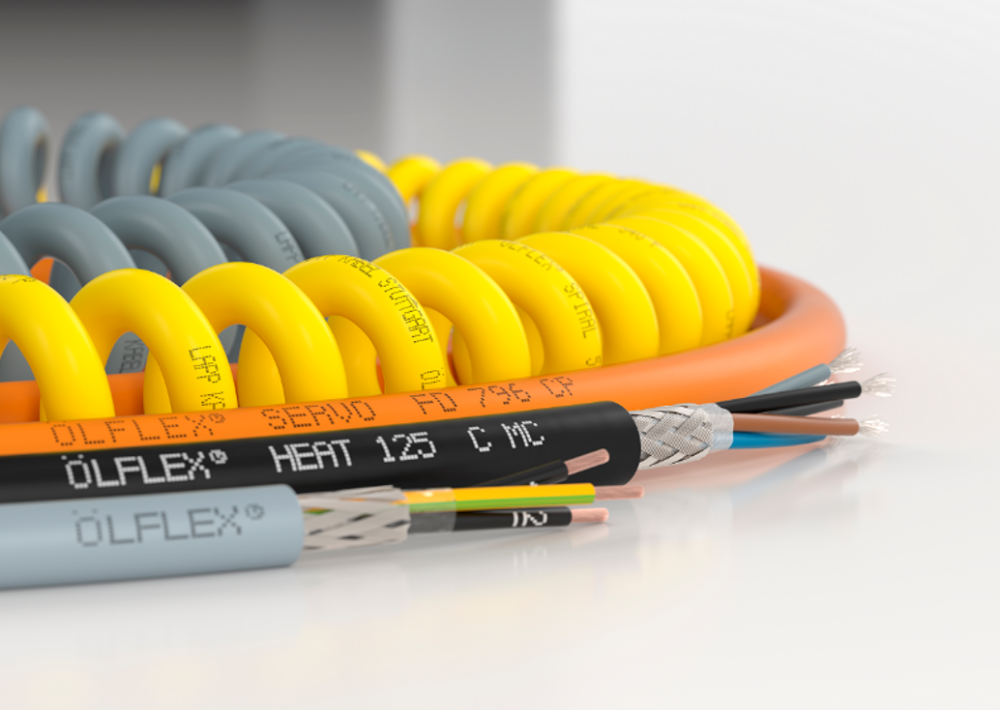
What are control cables used for?
LAPP’s ÖLFLEX® control cables transmit signals within a control circuit and control machine components with these control signals.
Industrial control cables are used to establish wiring within and across machines between electrical devices, machines, switchboards, sensors, and actuators. The control cables transmit simple signals used to control machines and their components. The signal receivers execute an action based on the control signals.
A control cable can contain two to typically 25 or, in rare cases, up to 100 numbered cores. The conductor cross-section is usually between 0.5 mm² and 2.5 mm², but can also be up to 35 mm² depending on the application. Flexible control cables should be space-saving and have suitable bending radii for their intended applications.
“Power and control cables are often used in the same applications, but have different functions. For example, a power cable provides the power supply to a machine control cabinet, and the control cables pass on commands to the machine,” explains Pullinger.

ÖLFLEX® CHAIN is designed for drag chain applications, which often involve additional bending and torsional movement, so the cables are designed to withstand these demanding tasks
Power cables vs control cables
| Characteristic | Power cables | Control cables |
|---|---|---|
| Function | Deliver electrical energy | Carry control signals |
| Typical use | Motors and power distribution | Control cabinets and machine I/O |
| Key criteria | Load, voltage drop, thermal conditions | Core count, identification, EMC and movement |
| Screening | Dependent on drive and installation | Dependent on interference and circuit design |
Some cable constructions are suitable for both functions. Confirm the individual product rating and installation requirements.
Standards Compliance
“When specifying electrical cables, one of the most important considerations is whether they comply with the relevant Standards and guidelines,” says Pullinger.
When selecting industrial power and control cables for machinery, relevant standards include DIN EN 60204-1:2019-06, which addresses the safety and electrical equipment of machinery and, in Part 1, defines requirements for cables and wires as well as their usage conditions.
“It’s also important to check whether there is a specific product standard with other or extended requirements that take precedence. These could be, for example, the application instructions of the IEC publication 62440:2008 for electrical cables with nominal voltages up to 450/750 V,” adds Pullinger.
The nominal voltage is the reference voltage for which cables and wires are constructed and tested. It is expressed by the ratio U0/U in volts, whereby:
- U0 is the effective voltage between a phase conductor and earth,
- U is the effective voltage between two phase conductors of a multi-core cable or a system of single core cables.
Cable selection: Performance Characteristics
Industrial power and control cables must meet stringent requirements to perform reliably in demanding conditions. Some of the essential properties to consider during cable selection include:
- Flexibility: Allows for easy installation and movement, particularly in dynamic applications.
- Oil and Chemical Resistance: Ensures durability in environments where exposure to oils, chemicals, and other substances is common.
- Temperature Resistance: Designed to withstand extreme temperatures, from freezing conditions to high-heat applications.
- Mechanical Strength: Withstands bending, torsion, and other mechanical stresses.
- Electromagnetic Compatibility (EMC): Shielded variants help prevent interference with sensitive electronic equipment.
Cable selection: Application
“With such a broad range of functions that power and control cables can provide, it’s important to consider where they will be used, how they will be used, and what else they will need to interact with,” says Pullinger.
LAPP’s ÖLFLEX® range includes:
- Halogen-free cables: offer suitable properties in the event of a fire
- Drag chain cables: are made of fine and extra-fine wire conductors for maximum mobility
- Robot and torsion cables: feature a special core stranding allows simultaneous bending and twisting
- Spiral cables: have a spiral cable shape for tight spaces
- Cables for industry-specific use: For direct current applications, SOLAR, TRUCK and TRAIN applications
- Cables for lift and conveyor technology: have additional support stranding and/or reinforcements
- Temperature-resistant cables: are made of cross-linked PE, silicone, FEP, PTFE or glass fibre
- Single cores: Single core and no sheath, for universal and simple wiring
- Infrastructure cables: For building connection and energy distribution
The future of cable technology
With industries rapidly advancing, cable technology continues to evolve to meet new challenges. Developments in materials, shielding techniques, and smart cable monitoring systems are enhancing the durability, efficiency, and safety of industrial power and control cables.
Understanding the selection, classification, and performance of industrial power and control cables is essential for ensuring the safe and reliable operation of modern industrial systems.
“LAPP continues to innovate, ensuring that ÖLFLEX® remains a trusted solution for industries worldwide,” concludes Pullinger.
Need help selecting the right cable?
Talk to LAPP Australia about your application, installation conditions and cable requirements.
Frequently Asked Questions
What is the difference between power and control cables? +
Power cables deliver electrical energy, while control cables carry signals used to operate equipment. Some designs support both functions.
How do I choose an industrial control cable? +
Check voltage, core count, conductor size, screening, movement, environmental exposure and applicable standards.
When should I use a screened cable? +
Consider screening where electromagnetic interference may affect circuit performance. Verify routing and screen termination requirements.
Can standard flexible cables be used in drag chains? +
Only if rated for the intended repeated bending conditions. Occasional flexing is not equivalent to drag chain operation.
Can ÖLFLEX® cables be used outdoors? +
Selected variants are suitable. Verify UV resistance, temperature, moisture and permitted installation conditions.
What Australian standards apply? +
AS/NZS 3000, AS/NZS 3008 and applicable product or equipment standards may be relevant. Confirm the scope and current requirements.
How do I determine conductor size? +
A qualified professional should assess load, voltage drop, temperature, installation method, grouping and circuit protection.
Are halogen free cables fire resistant? +
Not necessarily. Halogen content and circuit integrity under fire are separate performance characteristics.