

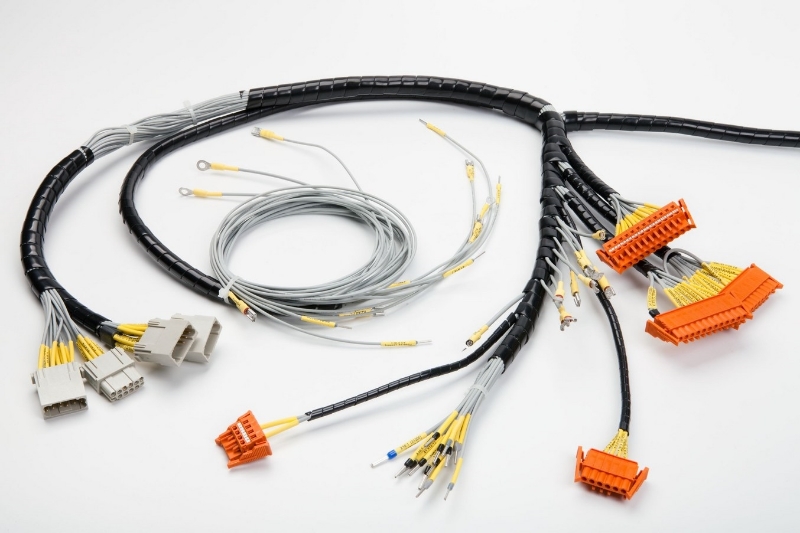

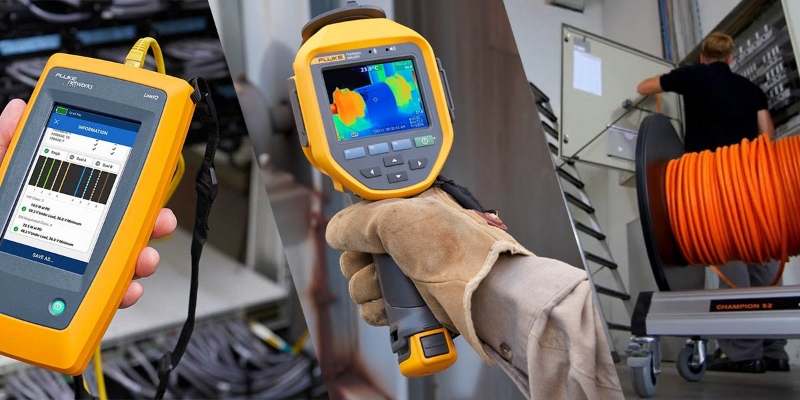
At the start of a project, harnessing is typically handled as a procurement topic. Requirements are defined, components are selected, and the expectation is straightforward: specify what is needed and have it delivered accordingly. For a while, that approach works without creating friction.
The hidden gap between design and reality
What changes is not the design itself, but the level of definition.
As the project develops, decisions start requiring more context than the original specification captures. A component change affects something beyond its immediate function. A routing adjustment has implications for installation. A detail that seemed minor begins to influence other parts of the system. At that point, the question is no longer only whether something can be produced, but whether it will still function correctly once everything is assembled.
At that point, harnessing stops being just a supply task. It becomes a matter of understanding how individual decisions come together within a system that is still in motion.
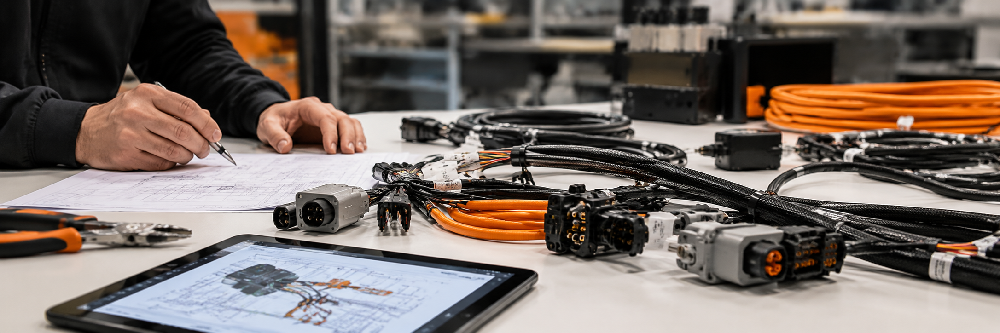
Why simple ordering cannot fix complex changes
This is where the limits of a pure supplier model become visible. Supplying according to specification works as long as the specification is complete and stable. Once it begins to evolve, overlap or leave gaps, the responsibility extends beyond delivery. Someone needs to evaluate how those changes behave in combination, not just individually.
You begin to see this shift in how work is carried out. Instead of simply defining and ordering, teams spend time clarifying requirements, checking system impact and aligning decisions across design, sourcing and assembly. The effort moves from execution to interpretation, not because something has failed, but because the system is no longer fully defined.
At that point, harnessing stops being just a supply task. It becomes a matter of understanding how individual decisions come together within a system that is still in motion.
As project complexity increases, teams need to:
- Clarify changing or incomplete requirements
- Check how individual changes affect the wider system
- Align decisions across design, sourcing and assembly
Key Takeaway
At a certain level of complexity, harnessing is no longer about getting the right parts delivered. It is about ensuring that those parts continue to work together as decisions evolve. This is where a supplier relationship reaches its limit, and where a more integrated, system-level approach becomes necessary.
LAPP Harnessing Solutions
This is where LAPP Harnessing Solutions operates, supporting decisions, changes and integration so harnessing works reliably in the context of the full system, not just to specification.
Need a harnessing partner?
Speak with LAPP Australia about your project requirements, design changes and system integration needs. Our harnessing specialists can work with you to develop a reliable, application-specific solution designed to perform across the complete system.