
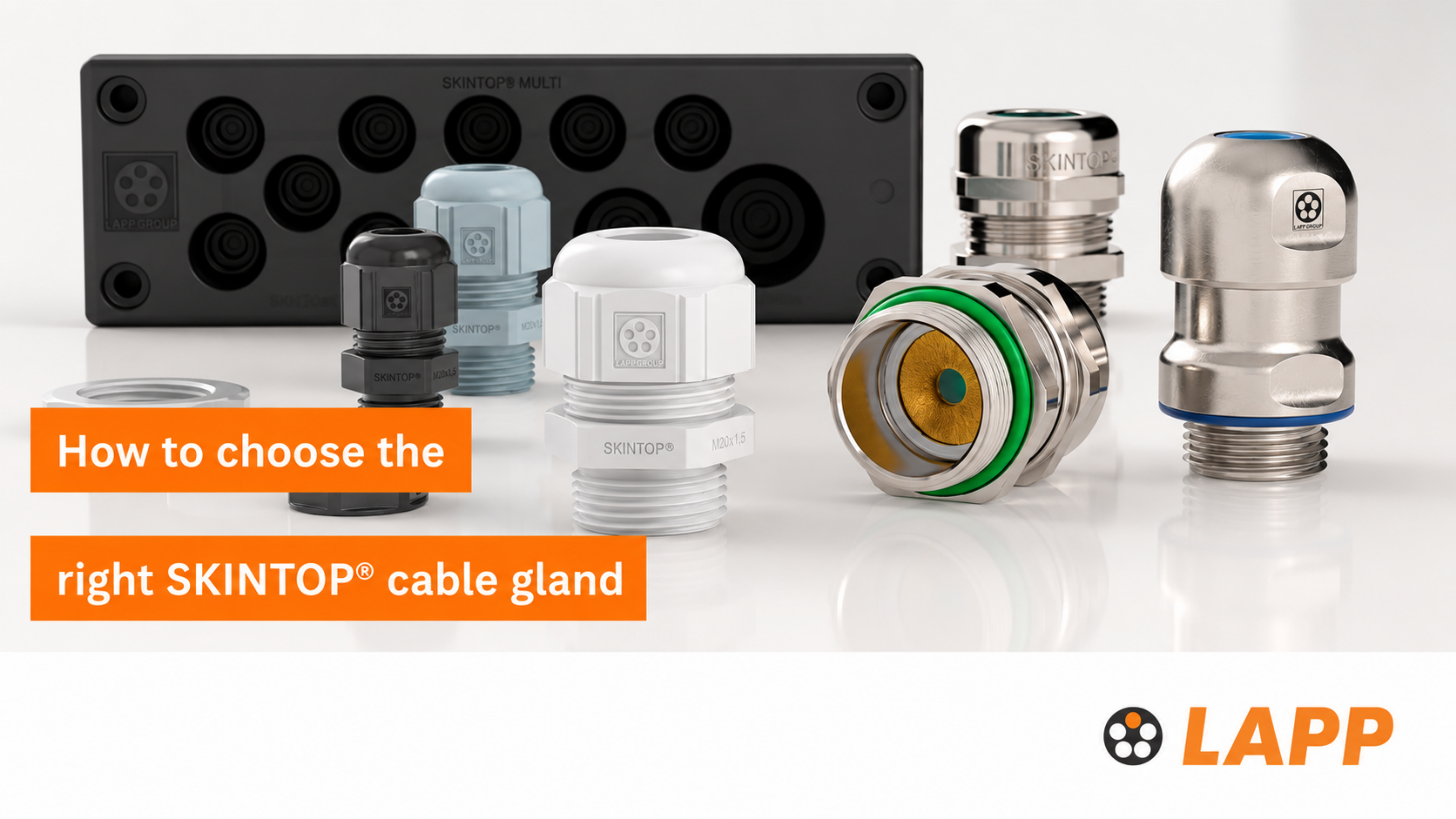
Choosing the right cable gland involves more than matching a cable to a thread size. Cable diameter, enclosure design, environmental conditions, material, ingress protection and special requirements such as EMC screen connection or hazardous-area approval all need to be considered.
This guide explains the key factors involved in selecting SKINTOP® cable glands, including a practical selection process, comparison chart and application guidance for machinery, automation, industrial networks, food production, outdoor installations and other demanding industrial environments.
Reliable cable entry starts with the application
A cable gland forms part of the overall cable entry and enclosure system. Correct selection helps secure and centre the cable, provide strain relief, support sealing and maintain the level of protection required by the installation.
Material
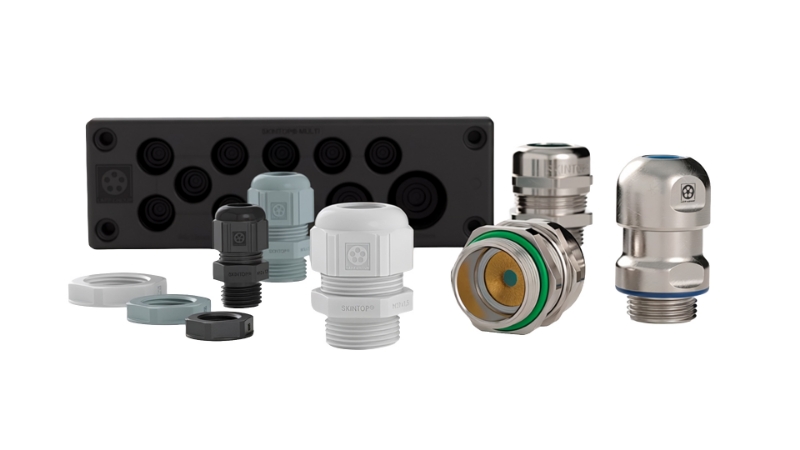
Plastic, nickel-plated brass or stainless steel may be selected depending on the mechanical, environmental and application requirements.
Thread
The required entry type and thread, such as metric, PG or NPT, should be confirmed together with any threadless solution required by the installation.
Environment
Exposure to indoor or outdoor conditions, water, dust, oils, chemicals, washdown processes, corrosion and hazardous environments should be considered.
Protection
The ingress protection rating, approvals and installation requirements of the exact cable gland article should be confirmed.
How to choose a cable gland
The five-step process provides a practical starting point for cable gland selection. Final selection should be confirmed against the cable dimensions, product data, enclosure requirements, approvals and installation instructions for the exact article.
01
Define the cable
The cable outer diameter, construction, screen or braid, movement requirements and minimum bending radius should be confirmed. The cable diameter must fall within the published clamping range of the selected gland.
02
Check the enclosure
The entry thread, enclosure wall thickness and available installation space should be checked. Any required locknut, sealing ring, reducer, enlarger or other accessory should also be identified.
03
Assess the environment
Exposure to water, dust, UV, oils, chemicals, corrosion, washdown processes and operating temperature should be assessed. The selected material should be suitable for the actual installation environment.
04
Confirm special functions
Requirements for EMC screen contact, anti-kink protection, multiple cable entry, pressure compensation, increased strain relief or hazardous-area approval should be identified.
05
Verify compliance
The exact IP rating, approvals, cable clamping range, thread dimensions, installation torque and installation instructions should be checked for the selected article.
Cable gland comparison chart
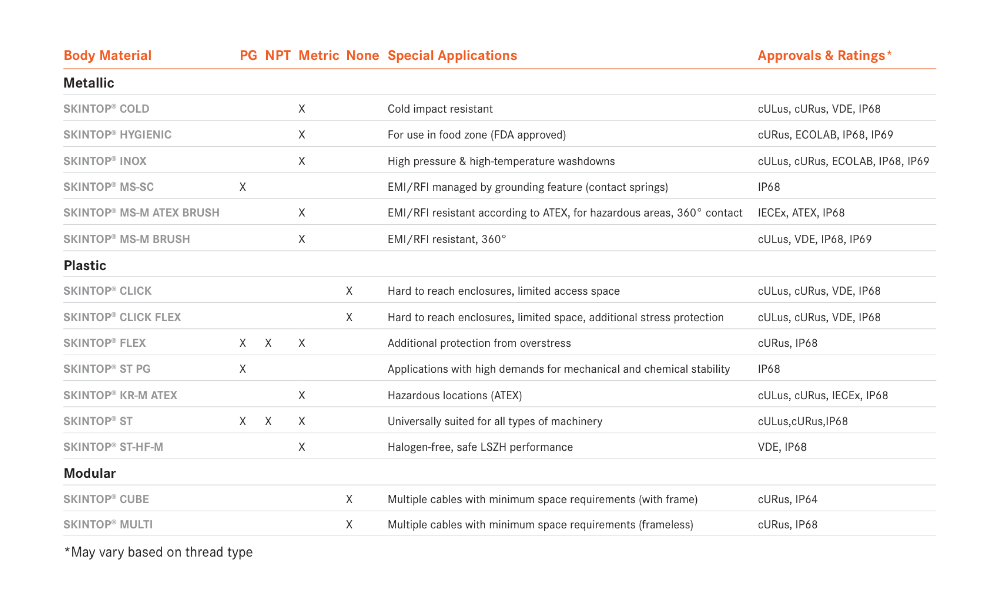
The SKINTOP® cable gland comparison chart allows specifiers to compare body materials, entry types, application requirements and typical protection ratings across the range. The technical data for the exact article should always be confirmed before final selection.
Download chart Explore cable glands
Application guide for Australian and New Zealand industries
Cable gland selection should reflect the conditions of the complete installation rather than thread size alone. The following considerations provide a practical starting point for common industrial applications.
Machine building and automation
Cable gland selection should account for vibration, strain relief, panel wall thickness, oil exposure, cable movement and available installation space.Drives, motors and EMC
Selection should consider the cable screen construction, required screen contact, earthing concept, enclosure design and installation method needed to support the overall EMC concept.
Food and beverage
Suitable cable glands should reflect hygienic-area requirements, washdown conditions, cleaning chemicals, corrosion resistance, material compatibility and applicable approvals.
Mining, oil and gas
Selection may need to consider hazardous-area classification, mechanical impact, chemical exposure, temperature range and the required certified cable gland and accessories.
Data centres and networks
Key considerations include cable outer diameter, bend protection, cabinet density, sealing requirements, installation access and future servicing.
Outdoor infrastructure
Cable gland selection should consider UV exposure, rain, dust, temperature cycling, corrosion and the required protection level of the complete enclosure system.
Need help selecting the right cable glands?
Our experienced team of electrical engineers can help you choose the right option for your install. Speak with one of our knowledgeable sales team members for product selection support, stock availability, quote requests, cable size enquiries and additional sizes on request, or shop online.
FAQs for cable gland selection
The following answers provide a practical starting point for cable gland selection. Product datasheets, applicable standards, approvals and installation requirements should always be checked for the exact article before specification.
What is the purpose of a cable gland? +
A cable gland secures and centres a cable where it enters an enclosure. Depending on the design, it can also provide strain relief, support ingress protection, protect against excessive bending or provide contact between a cable screen and the enclosure.
How do I choose between plastic, brass and stainless steel cable glands? +
Plastic cable glands are widely used for machinery, control panels and general industrial applications. Nickel-plated brass is often selected where greater mechanical robustness or EMC screen contact is required. Stainless steel can be suitable for corrosive environments, hygienic applications and demanding washdown conditions. Material compatibility should always be checked against the specific operating environment.
Which SKINTOP® cable gland is suitable for EMC applications? +
SSKINTOP® EMC cable glands, including MS-SC and BRUSH variants, are designed to provide contact with the cable screen. The appropriate gland depends on the cable screen construction, required contact method, enclosure design, cable diameter and environmental requirements.
What does IP68 or IP69 mean for a cable gland? +
An IP rating describes protection against the ingress of solid objects and water under defined test conditions. The rating of an individual cable gland does not automatically establish the same rating for the completed enclosure. Cable diameter, sealing surfaces, assembly, installation torque and any required accessories must also be considered.
Can one cable gland be used for different cable diameters? +
Many SKINTOP® cable glands provide a defined clamping range that accommodates multiple cable diameters. The actual cable outer diameter must remain within the published clamping range of the exact article. Cable glands should therefore not be selected by nominal thread size alone.
Which cable glands are used in hazardous areas? +
Cable glands used in hazardous areas must be approved for the relevant protection concept and installation conditions. Selection may need to consider equipment group, category or EPL, gas or dust group, temperature conditions and associated installation accessories. SKINTOP® ATEX and IECEx options are available, but the exact product and installation requirements should be verified before specification.